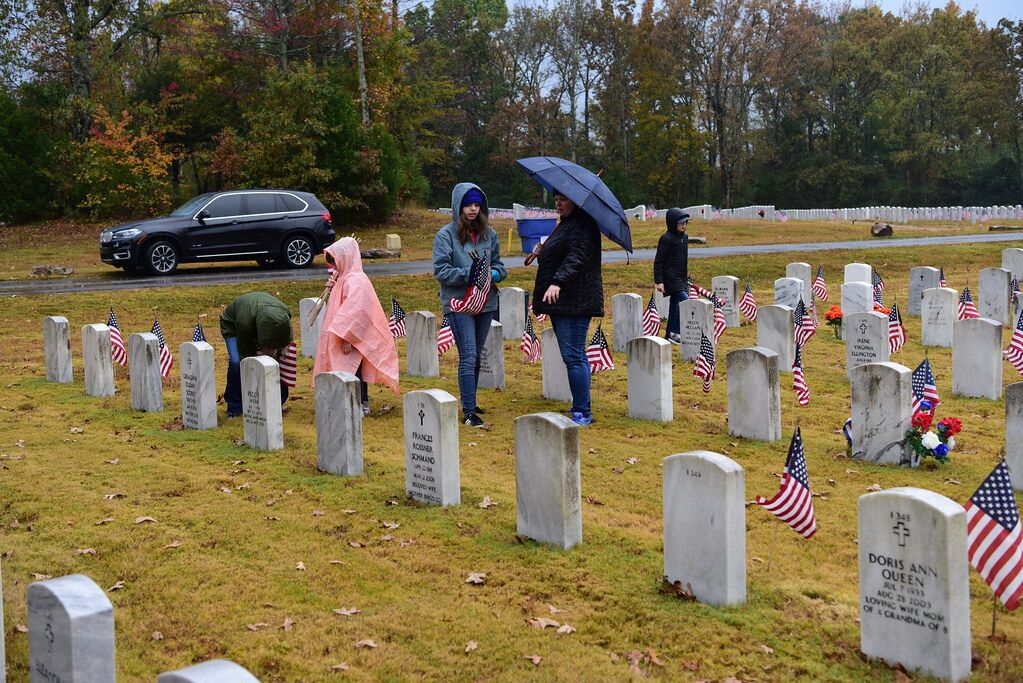
Burial in a VA national cemetery is one of the most meaningful benefits the Department of Veterans Affairs offers, and it's free for eligible veterans and for some of their family members. The benefit includes the gravesite, the opening and closing of the grave, a headstone or marker, a burial flag, and perpetual care of the gravesite, at no cost to the family. It honors the veteran's service and relieves the family of the cost of a burial plot.
Key takeaways
- The VA provides the headstone or marker, inscribed with the veteran's name, rank, branch of service, and dates of birth and death.
- The funeral director will need the veteran's discharge papers, the DD Form 214, to confirm eligibility.
- If the discharge papers aren't available, the VA can help obtain them, or the funeral director can request verification from the VA.
- The VA's National Cemetery Administration can tell you which cemeteries have space and what the options are.
Most veterans who were discharged under conditions other than dishonorable qualify, as do some spouses, dependent children, and, in limited cases, other family members. This guide explains who qualifies, what's included, and how to arrange a burial or to get a pre-need determination before death.
Burial in a national cemetery includes the gravesite, the opening and closing of the grave, a government headstone or marker, a burial flag, and perpetual care of the gravesite.
Who qualifies
Any member of the armed forces who dies on active duty qualifies, as does any veteran discharged under conditions other than dishonorable. The discharge status is the key requirement: a dishonorable discharge generally disqualifies the veteran, while an honorable discharge, a general discharge, and most other discharges qualify. If the discharge status is unclear, the VA can review it and make a determination.
Spouses and dependent children of an eligible veteran generally qualify for burial in the same national cemetery, in the same gravesite in some cases, or in an adjacent site. The spouse qualifies even if the spouse dies before the veteran, and the burial can be arranged in advance. Dependent children who are unmarried and under 21, or under 23 if a full-time student, generally qualify, as do unmarried adult children who became permanently incapable of self-support before age 21.
Members of the Reserve and National Guard may qualify if they meet specific service requirements, such as completing a period of active duty for training or being entitled to retired pay. The rules for Reserve and Guard members are more complex than for active duty veterans, so check with the VA for the specific situation.
What is included at no cost
Burial in a national cemetery includes the gravesite, the opening and closing of the grave, a government headstone or marker, a burial flag, and perpetual care of the gravesite. The VA provides the headstone or marker, inscribed with the veteran's name, rank, branch of service, and dates of birth and death. The family doesn't pay for any of these items.
The VA also provides a Presidential Memorial Certificate, covered in a companion guide, and military funeral honors, including the folding and presentation of the flag and the playing of Taps. Those benefits are arranged through the cemetery and the military, and they're provided at no cost.
The family is responsible for the funeral home's services — preparation of the body, the casket, and transportation to the cemetery — unless the veteran is entitled to a burial allowance that helps with those costs. The cemetery itself doesn't charge for the burial, but the funeral home does charge for its services. A burial allowance, covered in a companion guide, can help with those costs.
How to arrange a burial
At the time of need, the funeral director usually contacts the national cemetery on the family's behalf and arranges the burial. The funeral director will need the veteran's discharge papers, the DD Form 214, to confirm eligibility. If the discharge papers aren't available, the VA can help obtain them, or the funeral director can request verification from the VA.
The family chooses the national cemetery, subject to availability. Some national cemeteries are closed to new burials because they're full, while others have space. The VA's National Cemetery Administration can tell you which cemeteries have space and what the options are. Burial is generally scheduled within a few days of the request, though the timing depends on the cemetery's schedule.
Cremated remains can also be buried or inurned in a national cemetery, in a gravesite or in a columbarium niche. The same eligibility rules apply, and the same benefits, including the headstone or marker, are provided. Some families choose cremation and inurnment because it allows the remains to be placed in a national cemetery even when a full burial isn't possible.
Pre-need determination
A pre-need determination lets a veteran or family find out in advance whether burial in a national cemetery is available. The veteran, spouse, or family member applies using VA Form 40-10007, Application for Pre-Need Determination of Eligibility for Burial in a VA National Cemetery, and the VA issues a determination letter. The letter isn't a reservation of a specific gravesite, but it confirms eligibility and speeds the process at the time of need. A pre-need burial determination VA application — VA Form 40-10007 — lets a veteran or family find out in advance whether burial in a national cemetery is available, so the decision does not have to be made in the middle of a bereavement.
Applying in advance is a kindness to the family. At the time of death, the family is grieving and making many decisions at once. A pre-need determination removes one uncertainty and lets the family focus on the funeral arrangements rather than on proving eligibility. The application is free, and it can be filed online, by mail, or through a Veterans Service Organization.
Keep the determination letter with the veteran's important papers, and tell the family where it is. The funeral director will need it, or the discharge papers, at the time of need. If the veteran's circumstances change — for example, if the discharge status is upgraded — the determination can be updated.
What if the veteran is buried elsewhere
If the veteran is buried in a private cemetery, the VA still provides a government headstone or marker free of charge, and a burial flag and a Presidential Memorial Certificate. The family can apply for the headstone through the VA, using VA Form 40-1330, and the VA ships the headstone to the cemetery. The cemetery may charge a fee to set the headstone, which the family must pay.
A burial allowance and a plot allowance may also be available for a veteran buried in a private cemetery, depending on the circumstances. Those allowances are covered in a companion guide. The family should ask the funeral director and the VA about all the benefits available, because the benefits for a private burial are different from those for a national cemetery burial.
Some families choose a private cemetery because it's closer to home, or because other family members are buried there. That's a personal choice, and the VA benefits for a private burial are designed to honor the veteran's service even when the burial isn't in a national cemetery.
Common mistakes
The most common mistake is not having the discharge papers available at the time of need, which delays the burial. A second is assuming every national cemetery has space, when some are closed to new burials. A third is not applying for a pre-need determination in advance, when it would have made the process easier for the family. A fourth is assuming the VA pays the funeral home, when the VA pays for the cemetery burial and the family pays the funeral home.
Frequently asked questions
Who qualifies for burial in a VA national cemetery?
Most veterans discharged under conditions other than dishonorable, members who die on active duty, and their spouses and dependent children generally qualify. Reserve and Guard members may qualify if they meet specific service requirements.
What is included free?
The gravesite, the opening and closing of the grave, a government headstone or marker, a burial flag, and perpetual care, plus a Presidential Memorial Certificate and military funeral honors.
How do I arrange a burial in a national cemetery?
The funeral director usually contacts the cemetery, using the veteran's discharge papers to confirm eligibility. The family chooses the cemetery, subject to availability.
What is a pre-need determination?
It is a VA decision, made in advance on Form 40-10007, that confirms eligibility for burial in a national cemetery. It is free and speeds the process at the time of need.
Need help?
If this guide does not answer your question, the directory lists every program and tool on this site.
Source: U.S. Department of Veterans Affairs, National Cemetery Administration
Sources
- U.S. Department of Veterans Affairs, National Cemetery Administration — eligibility and burial benefits, va.gov.
- U.S. Department of Veterans Affairs — VA Form 40-10007, Pre-Need Determination of Eligibility, va.gov.