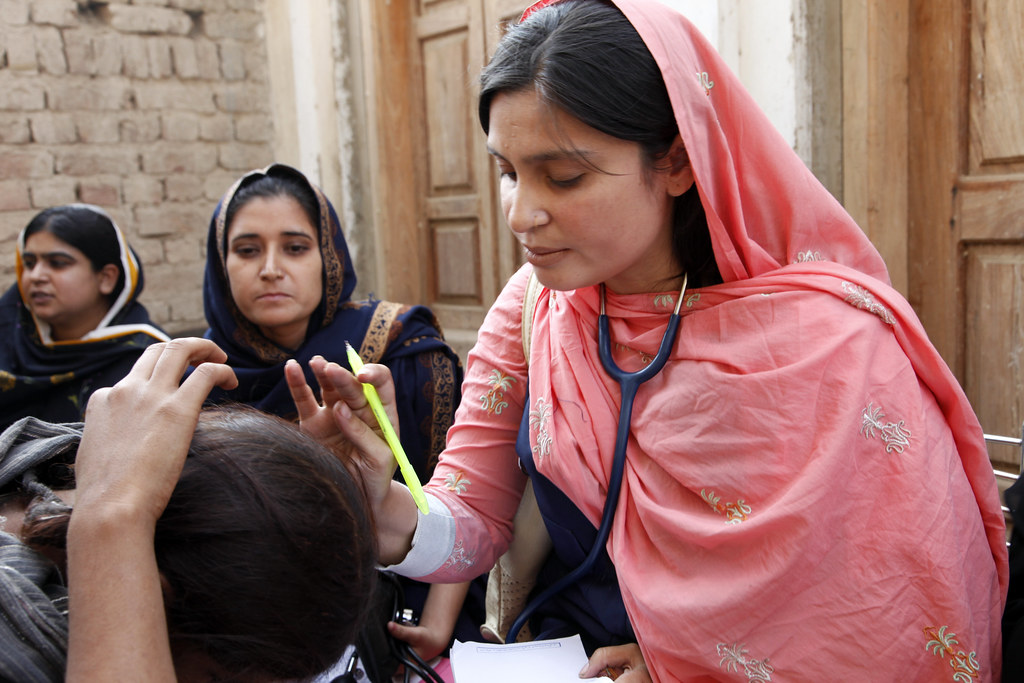
A Federally Qualified Health Center — an FQHC, usually called a community health center — is a clinic that has to serve everyone in its area, whether or not they have insurance, and whether or not they can pay. There are more than 1,400 of them, with more than 16,200 service sites, in every state, territory and the District of Columbia. They are funded by the Health Resources and Services Administration, under Section 330 of the Public Health Service Act.
Key takeaways
- The center's governing board has to be made up of at least 51 percent patients, so the people who use the center run it.
- At or below 100 percent of the federal poverty level, the patient pays only a nominal charge — a small flat fee for the visit.
- Between 101 and 200 percent of poverty, the patient pays a partial fee, with at least three graduated tiers, so the fee rises as income rises.
- For a single person in the 48 contiguous states, the 2026 federal poverty level is $15,960.
Here's what a community health center offers, how the sliding fee discount works, who can use one, and how to find a center. If you have no insurance, or your insurance has a high deductible, a community health center is often the cheapest way to see a doctor.
Anyone in the center's service area can use it, regardless of insurance, income or immigration status.
What a community health center is
A community health center is a nonprofit clinic that serves a defined area, usually a neighborhood or a county where care is hard to find. It has to provide primary care — family medicine, internal medicine, pediatrics and obstetrics and gynecology — and most centers also provide dental care, behavioral health care, pharmacy services and help with enrolling in insurance or benefits. The center's governing board has to be made up of at least 51 percent patients, so the people who use the center run it. When this guide says community health centers FQHC, it means clinics funded under Section 330 of the Public Health Service Act.
Two kinds of center are part of the same program: Migrant Health Centers, which serve farmworkers and their families, and Health Care for the Homeless programs, which serve people experiencing homelessness. Both are FQHCs, and both follow the same rules on who they serve and what they charge.
Who can use one, and what it costs
Anyone in the center's service area can use it, regardless of insurance, income or immigration status. No patient is turned away for inability to pay — that is a condition of the federal funding, not a courtesy. If you have insurance, the center bills your insurance. If you do not, the center charges you on a sliding fee discount, based on your income and household size. The community health centers FQHC label means a clinic meets federal standards and must serve everyone, so no patient is turned away for being unable to pay.
The sliding fee discount works in bands. At or below 100 percent of the federal poverty level, the patient pays only a nominal charge — a small flat fee for the visit. Between 101 and 200 percent of poverty, the patient pays a partial fee, with at least three graduated tiers, so the fee rises as income rises. Above 200 percent of poverty, the patient pays the center's standard fee. The 2026 federal poverty level for a single person in the 48 contiguous states is $15,960, so the full discount applies up to that income, and the partial discount up to $31,920. The discount is locked for 12 months once it is set, and you reapply once a year.
What services they provide
Primary care is the core: check-ups, sick visits, chronic disease care, vaccinations and preventive screening. Most centers also provide dental care — cleanings, fillings and extractions — and behavioral health care, including counseling for depression, anxiety and substance use. Many provide prenatal care, family planning, and help with prescriptions, either through an on-site pharmacy or through the federal 340B drug discount program.
The center also helps with the things that are not medical but affect health: enrolling in Medicaid or a Marketplace plan, applying for food assistance, finding transport, and connecting with housing help. That help is part of the model, and it is free. A patient who comes in for a check-up and leaves with health coverage and a food referral has received more than a medical visit.
How to find a center
The Health Resources and Services Administration runs a finder at findahealthcenter.hrsa.gov, which lists centers by address and by the services they offer. You can also call the center directly — the finder gives the phone number — and ask about the sliding fee discount, the hours, and whether new patients are being accepted. Most centers accept walk-ins for urgent problems, although a regular visit usually needs an appointment.
If the nearest center is far away, ask about mobile clinics and telehealth. Many centers run a mobile clinic that visits outlying areas on a schedule, and many offer telehealth visits for follow-up care. The center can also tell you about other low-cost options in the area, including free clinics and hospital charity care programs.
Community health centers and free clinics
A community health center and a free clinic are not the same thing. A free clinic is usually run by volunteers and charges nothing, but it may only be open a few hours a week and it may not offer the full range of services. A community health center is a full-time clinic with paid staff, a sliding fee, and a federal obligation to serve everyone in its area.
For most people, the community health center is the better first stop: it is open regular hours, it offers the full range of primary care, and the sliding fee means the cost is based on what you can pay. A free clinic is a useful option if there is no community health center nearby, or if you need a specific service the center does not offer.
Frequently asked questions
What is a Federally Qualified Health Center?
An FQHC, usually called a community health center, is a nonprofit clinic funded by the Health Resources and Services Administration that serves everyone in its area, with fees based on income.
Do I need insurance to use a community health center?
No. Anyone in the center's service area can use it, regardless of insurance, income or immigration status, and no patient is turned away for inability to pay.
How much does a visit cost?
It depends on your income. At or below 100 percent of the federal poverty level, you pay only a nominal charge. Between 101 and 200 percent, you pay a partial fee. Above 200 percent, you pay the standard fee.
What is the federal poverty level for 2026?
For a single person in the 48 contiguous states, the 2026 federal poverty level is $15,960. The full discount applies up to that income, and the partial discount up to $31,920.
What services do community health centers provide?
Primary care, dental care, behavioral health care, pharmacy services, prenatal care, vaccinations and preventive screening, plus help enrolling in insurance and benefits.
How do I find a community health center near me?
Use the finder at findahealthcenter.hrsa.gov, which lists centers by address and by the services they offer, or ask your state primary care association.
Need help?
If this guide does not answer your question, the directory lists every program and tool on this site.
Sources
- Health Resources and Services Administration — Federally Qualified Health Centers: Section 330 of the Public Health Service Act, the sliding fee discount, the patient-majority board, and the center finder.