A disaster survivor who never received SNAP often doesn't know that D-SNAP exists — and D-SNAP is a separate, one-time benefit designed precisely for that person.
Key takeaways
- It isn't regular SNAP, it doesn't last as long, and it opens only after a disaster declaration.
- D-SNAP isn't the only food help after a disaster.
- The most common mistake is missing the application window.
- The short answer is yes — if the household meets the D-SNAP rules for that disaster.
Can a person who never got SNAP get D-SNAP? The short answer is yes — if the household meets the D-SNAP rules for that disaster. D-SNAP has its own income and resource limits, set for the disaster, and a household that earns too much for regular SNAP may still qualify for D-SNAP, because the limits take account of the disaster's effect on the household's income and expenses.
Quick answer: Disaster SNAP, known as D-SNAP, provides short-term funds for food in a presidentially declared disaster area, and it's open to households that would not normally qualify for SNAP, because the disaster has destroyed their food, their income, or their ability to buy food.
Regular SNAP is an ongoing monthly benefit for low-income households, with income and resource limits that apply every month.
What D-SNAP is
It isn't regular SNAP, it doesn't last as long, and it opens only after a disaster declaration.
D-SNAP is a short-term food benefit provided after a presidentially declared disaster, under the authority of the Food and Nutrition Service of the U.S. Department of Agriculture. It provides funds for food to households in the declared disaster area, and it's operated by the state agency that runs SNAP in that state. The benefit is one month of food assistance, at the maximum SNAP allotment for the household size — which means a household receives the full amount for its size rather than an amount reduced by its income.
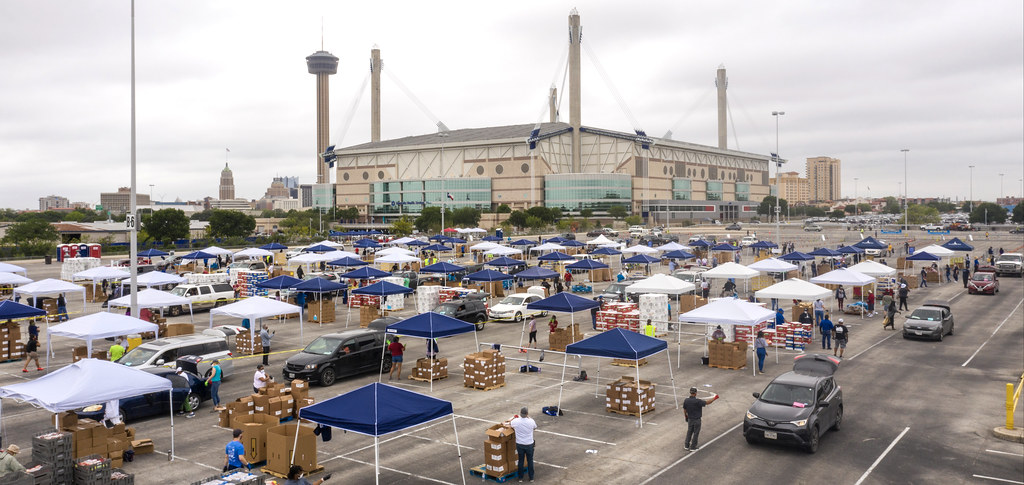
D-SNAP is available only after a presidential disaster declaration that includes Individual Assistance, and only when the state requests it and the Food and Nutrition Service approves it. The state has to operate the program, and it does so for a limited period — usually a few days to a week — during which eligible households can apply in person at designated sites. The application window is short, and it's announced through the state agency, local news, and disaster recovery centers.
A recent example shows how it works in practice. The Food and Nutrition Service approved Louisiana's D-SNAP operation for July 27–31, 2026, following Tropical Storm Arthur, after a major disaster declaration on June 30, 2026. The operation lasted five days, and households in the declared parishes could apply during that window. A household that missed the window could not apply later.
How D-SNAP differs from regular SNAP
The first difference is who can get it. Regular SNAP is an ongoing monthly benefit for low-income households, with income and resource limits that apply every month. D-SNAP is a one-time benefit for households affected by a specific disaster, with limits set for that disaster that take account of the household's disaster-related losses — destroyed food, lost income, and disaster expenses. A household that doesn't qualify for regular SNAP may qualify for D-SNAP, and a household that already receives SNAP may receive a supplement to bring its benefit up to the maximum for the month.
The second difference is how long it lasts. Regular SNAP continues as long as the household remains eligible and recertifies. D-SNAP is one month of benefits, and it doesn't continue. A household that needs ongoing food help after the disaster should apply for regular SNAP — and the D-SNAP application is often the point at which the household is screened for regular SNAP as well.
The third difference is how it's applied for. Regular SNAP is applied for at the state agency, online, by phone, or in person, at any time. D-SNAP is applied for in person, at designated sites, during a short window announced for that disaster. The in-person requirement exists because the state needs to verify the household's identity, residence in the disaster area, and disaster-related losses quickly, and because many households in a disaster area have no power or internet access.
| Regular SNAP | D-SNAP | |
|---|---|---|
| Who qualifies | Low-income households, with income and resource limits that apply every month | Households affected by a specific disaster, with limits set for that disaster that take account of disaster-related losses — destroyed food, lost income and disaster expenses |
| How long it lasts | Ongoing monthly benefit, as long as the household remains eligible and recertifies | One month of benefits; it does not continue |
| How to apply | At the state agency, online, by phone or in person, at any time | In person, at designated sites, during a short window announced for that disaster — usually a few days to a week |
| Current SNAP households | Already receiving the benefit | May receive a supplement to bring the benefit up to the maximum for the month |
| What triggers it | An ongoing program | Only after a presidential disaster declaration that includes Individual Assistance, and only when the state requests it and the Food and Nutrition Service approves it |
D-SNAP: strengths and limits
- Strength: open to households that would not normally qualify for SNAP, because the disaster has destroyed their food, their income, or their ability to buy food.
- Strength: current SNAP households may receive a supplement to the maximum for the month.
- Limit: one month only — a household that needs ongoing food help after the disaster should apply for regular SNAP.
- Limit: applied for in person, during a short window, at designated sites.
Which one to apply for
- Apply for D-SNAP when the household was affected by a declared disaster and needs food help now, including households that do not qualify for regular SNAP.
- Apply for regular SNAP when food help is needed month after month, or when the D-SNAP window has closed.
Who qualifies for D-SNAP
The household must have lived or worked in the declared disaster area at the time of the disaster, and must have suffered a disaster-related loss: destroyed or spoiled food, loss of income, or disaster-related expenses such as temporary shelter or evacuation costs. The household must meet the D-SNAP income and resource limits for that disaster, which are set by the state with federal approval and are published when the program opens.
Households that already receive SNAP can receive a D-SNAP supplement if their current benefit is below the maximum for their household size. Households that don't receive SNAP can apply for the full D-SNAP benefit. Households that receive food from another disaster program, such as a food distribution program, may still qualify for D-SNAP, but the state will ask about other assistance received.
Some households can't receive D-SNAP. A household that doesn't live or work in the declared area, a household that didn't suffer a disaster-related loss, and a household that doesn't meet the income and resource limits will be denied. The denial should explain the reason, and the household can ask for a review if it disagrees.
How to apply for D-SNAP, step by step
Watch for the announcement. The state agency announces the D-SNAP operation, the application sites, and the dates, through its website, local news, and disaster recovery centers. The window is short — often a few days — and the household should plan to apply on the first day if possible, because the sites can be crowded and the lines long.
Bring identification, proof of residence in the disaster area, and information about the household's income, resources, and disaster-related losses. The state will need to know who is in the household, what income the household has, what the household lost in the disaster, and what the household spent because of the disaster. If documents were destroyed, say so and ask what alternative evidence the state will accept.
If the application is approved, the benefit is loaded onto an EBT card, which the household can use to buy food at authorized retailers. The benefit must be used within the period set by the state — usually the month it is issued — and the household should check the balance and the expiry date on the card. If the application is denied, the denial letter explains why and how to ask for a review.
Other food help after a disaster
D-SNAP isn't the only food help after a disaster. Food banks and pantries often run extra distributions after a disaster, and the Red Cross and other relief organizations provide meals and food. The local 211 service can list the food help available in the area, and the disaster recovery center can tell you what's open and where.
Keep the receipts for food bought after the disaster, and keep photographs of food that was lost. Those records are the evidence for a D-SNAP application, for a SNAP replacement claim, and for any insurance claim — and they're hard to reconstruct later.
Common mistakes that cost survivors D-SNAP
The most common mistake is missing the application window. D-SNAP opens for a few days and then closes, and a household that waits for the regular SNAP process will miss it. A second mistake is assuming D-SNAP is only for people who already receive SNAP. It isn't: it's designed for households that don't normally receive SNAP, and those households are the ones most likely to miss it because they've never dealt with the SNAP agency before.
A third mistake is not bringing the documents that prove the disaster loss. The state needs evidence of the loss — destroyed food, lost income, or disaster expenses — and an applicant who can't show it may be denied. A fourth mistake is not applying for regular SNAP after receiving D-SNAP. D-SNAP is one month of help; a household that needs ongoing help should apply for regular SNAP before the D-SNAP benefit runs out.
Be careful with anyone who offers to get you D-SNAP for a fee. Applications are free, and the state's SNAP agency and the disaster recovery center are the places to apply.
Frequently asked questions
Can I get D-SNAP if I never received SNAP before?
Yes. D-SNAP is a separate one-time benefit for households affected by a declared disaster, and it is open to households that do not normally qualify for regular SNAP, provided they meet the D-SNAP income and resource limits for that disaster.
How much does D-SNAP pay?
One month of benefits at the maximum SNAP allotment for the household size. Households already receiving SNAP may receive a supplement to bring their benefit up to the maximum for the month.
How long is the D-SNAP application window?
It is short — usually a few days to a week — and it is announced by the state agency for each disaster. For example, Louisiana's D-SNAP operation for Tropical Storm Arthur ran July 27–31, 2026.
Do I have to apply for D-SNAP in person?
Usually yes. D-SNAP applications are taken in person at designated sites during the application window, because the state needs to verify identity, residence, and disaster losses quickly, and many households have no power or internet access after a disaster.
What documents do I need?
Identification, proof of residence, proof of income, and evidence of disaster-related expenses, such as receipts and photographs of the loss.
Need help?
If this guide does not answer your question, the directory lists every program and tool on this site.
Source: U.S. Department of Agriculture, Food and Nutrition Service
Sources
- U.S. Department of Agriculture, Food and Nutrition Service — Disaster SNAP: short-term funds for food in a presidentially declared disaster area; one month of benefits at the maximum SNAP allotment for the household size; state must request and operate it; only after a presidential Individual Assistance declaration.
- U.S. Department of Agriculture, Food and Nutrition Service — Louisiana Disaster Nutrition Assistance — Tropical Storm Arthur D-SNAP operation, July 27–31, 2026, in Avoyelles, St. Landry, St. Tammany and Terrebonne parishes; major disaster declaration June 30, 2026.
- Louisiana Department of Health, LDH announces D-SNAP for eligible households affected by Tropical Storm Arthur — applications July 27–31, 2026, 8 a.m. to 6 p.m.
- Federal Emergency Management Agency — Disaster Recovery Centers: application sites and information after a disaster.